


Timelines 10
Man and his Senses 10
Man and his Inventions 10
Geography 10
Fauna 10
Timelines 10
Man and his Senses 10
Man and his Inventions 10
Geography 10
Fauna 10
When the Delhi Sultanate was establishing its place in India’s history and domes and arches were rising toward the sky, a different kind of transformation was unfolding at the same time in the lap of the Himalayas. This story belongs to the early medieval period. While stones were being carved in Delhi, Nepal’s Kathmandu Valley was gradually turning into what many now describe as an open air museum.
Today, we take a journey into that era when the Malla kings created remarkable examples of art and culture that continue to amaze the world. We will explore how what is often called the Newar Renaissance, a period of artistic and cultural revival, began in Nepal with the rise of Ari Malla around 1200 CE. We will also look at a moving development from January 2026, when a stolen piece of sacred art was finally returned to Nepal from Britain. Let us travel back eight hundred years and see how art and devotion connected India and Nepal, even when their kingdoms were following different political paths.
How Did the 'Newar Renaissance' Start in Nepal?
If we turn the pages of history, we find that around 1200 CE a significant change took place in Nepal. This was the era of Ari Malla. With his rise to power, the Malla Dynasty emerged and brought stability to the Kathmandu Valley. It was not merely a shift in political authority, but the beginning of a new cultural awakening.
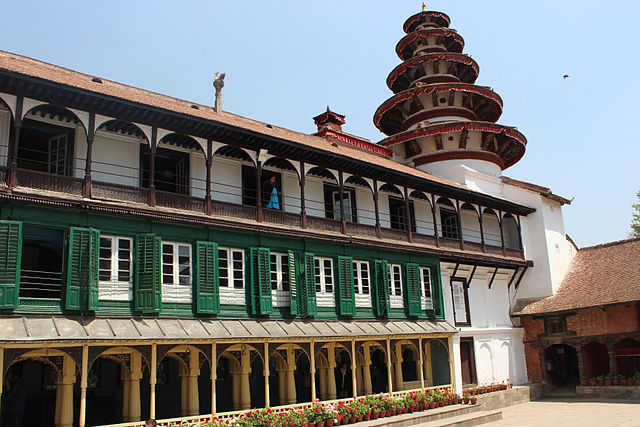
The Rubin Museum describes this period as the “Newar Renaissance.” Much like the Renaissance in Europe, Kathmandu, Patan, and Bhaktapur witnessed a remarkable flourishing of art and creativity. The Malla kings were great patrons of artistic expression. Under their rule, the Kathmandu Valley filled with temples, sculptures, and magnificent palaces. During this time, entire cities became living galleries of craftsmanship and devotion, laying the foundation of what we now recognize as Nepal’s cultural identity.
What Was the Difference Between Delhi's Domes and Nepal's Pagodas?
Now let us compare the architectural styles that were developing at the same time. During this period, the Delhi Sultanate ruled much of northern India and introduced a new architectural tradition known as the Indo Islamic style. According to historical research, the Sultans began using the true arch and the dome in Indian construction. Monuments such as the Qutub Minar complex and the Alai Darwaza illustrate this style clearly. In these structures, stones were carefully arranged in curved forms to create large domes, something that was relatively new in the architectural traditions of India at the time.
Nepal, however, followed a very different path. Historical records and UNESCO documentation show that the Malla kings favored the pagoda style instead of domes. This style featured multi layered roofs built with wood and brick, with each level gradually narrowing toward the top and often including projecting balconies. The distinctive architecture of the Malla period was so striking that it later influenced architectural traditions across parts of East Asia. Thus, while Delhi was becoming known for its domes and arches, Kathmandu gained recognition as a city of pagodas.
While Kings Followed Different Paths, Were the People Still Connected?
Even though the palaces and temples of the kings followed different styles, a kind of “mystic bridge” connected ordinary people across the region. This bridge was formed through the Bhakti and Sufi movements. During this period, religion began to move beyond rigid rituals and formal structures.
Bhakti saints and Sufi mystics worked to reduce the distance between Hindu and Muslim traditions. Figures such as Kabir and Nanak, along with Sufis from the Chishti order, spread messages of love, devotion, and unity. Their teachings were not confined by political boundaries. Through the influence of these spiritual movements, the people of India and Nepal remained connected by shared ideas and beliefs. Nath yogis and Sufi saints showed that while political maps may divide territories, spirituality has the power to unite communities.
Did 'Make in Nepal' Exist in That Era Too?
Art was not limited to temples and palaces; it was also present in everyday life and commerce. According to studies highlighted by the Metropolitan Museum of Art, there was a significant trade in metal sculptures between Nepal and India during the early medieval period.
Nepali artisans were highly skilled in carving both metal and stone. The statues they created were admired for their precision and beauty, leading to strong demand across regions such as Tibet and India. This thriving trade demonstrates how deep the exchange between the two regions truly was. It was not only an exchange of ideas but also of craftsmanship and technical skill. The presence of Nepali artworks in Indian markets reflects the respect and appreciation that communities held for each other’s artistic traditions.
Now let us turn to the present day. History rarely disappears; it often returns in unexpected ways. In January 2026, an important development once again brought attention to this shared cultural heritage. The news concerned the return of a stolen artwork from Britain.
According to reports, a precious Torana, a decorative gateway element from the Malla period, had been stolen and eventually reached Britain. After sustained efforts, it was finally returned to Nepal and placed at the Kumari Ghar in Kathmandu. This Torana is not merely an object of wood or metal; it represents the artistic brilliance of the era when the Malla kings adorned Kathmandu with remarkable works of craftsmanship. Its return shows that the commitment to protecting and restoring cultural heritage remains strong even today.
This was the story of the period between 1000 and 1450 CE. During this time, the Delhi Sultanate transformed the skyline of northern India with domes and arches, while the Malla kings filled Nepal’s cities with elegant pagodas. The paths were different and the styles distinct, yet the cultural spirit remained deeply connected.
The sense of unity nurtured by the Bhakti and Sufi traditions, along with the trade relationships built by artisans, continues to resonate even today. When a lost artwork from the Malla period returns home in 2026, it reminds us that this heritage belongs not only to Nepal but to the shared history of the entire subcontinent. Whether expressed through a dome or a pagoda, each stands as a beautiful chapter in a common story.
संदर्भ
https://tinyurl.com/2bchott9
https://tinyurl.com/2xju9snm
https://tinyurl.com/2yvuo6kj
https://tinyurl.com/22yyex5c
https://tinyurl.com/27rm49r3
https://tinyurl.com/2xo8cf8w
https://tinyurl.com/28fqw5kp