


Timelines 10
Man and his Senses 10
Man and his Inventions 10
Geography 10
Fauna 10
Timelines 10
Man and his Senses 10
Man and his Inventions 10
Geography 10
Fauna 10
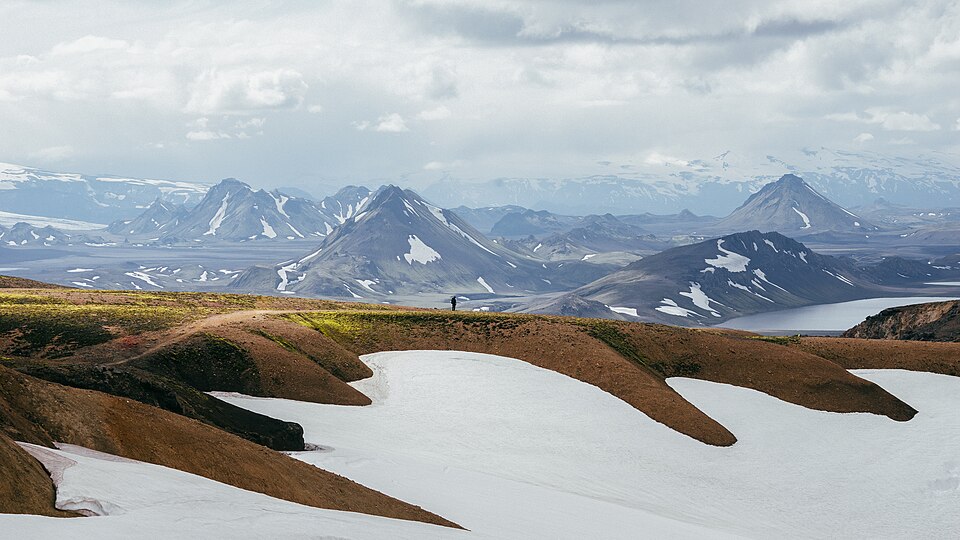
Imagine a time when the Himalayas were not the serene, postcard perfect range we know today, but a harsh and unforgiving barrier. Around 40,000 years ago, this entire region was gripped by extreme cold, with howling icy winds, vast sheets of snow, and temperatures that made survival a constant struggle. In such conditions, crossing the towering Himalayan peaks was nearly impossible for early humans.
Yet the instinct to survive led humans to find another path. Instead of attempting the impassable high mountains, they moved along the Shivalik Hills, a lower and more forgiving range that today forms a natural link between India and Nepal. This was the route followed by early human communities long before the existence of maps, borders, or nations. They traveled with shared customs and similar tools, connected not by territory but by the simple need to survive.
This is the story of the Soan Culture, a reminder that the shared history of this region is rooted not in political boundaries, but in the earliest human footsteps that crossed this land.
Why the Shivalik Hills Became a Lifeline for Early Humans?
Stretching across northern India and into Nepal, the Shivalik Hills form a continuous geographical belt. Archaeological and scientific research indicates that early humans, or hominids, deliberately chose this corridor for migration and settlement. Excavations conducted across the Shivalik range in northern India suggest that this region served as a primary route for early human movement.
At the time, the higher Himalayas were buried beneath thick layers of ice, forming an almost insurmountable natural barrier. Life could scarcely survive in such conditions. In contrast, the Shivalik Hills offered more than just a passage. They provided water sources, hunting grounds, and a relatively stable climate. This explains why traces of human activity are found throughout the belt stretching from Punjab in India to Nepal.
Far from being a narrow trail, the Shivalik route functioned as the main artery of movement in prehistoric South Asia, a natural corridor that kept early communities connected across vast distances.
The most significant evidence of this shared past lies in stone tools. Archaeologists refer to these findings as the Soan Industry, named after the Soan River Valley, although its influence extended across the entire Shivalik region of the Indian subcontinent.
What sets these tools apart is the way they were made. They were fashioned from pebbles, rounded stones that were carefully struck to produce sharp edges. The toolkit mainly consisted of choppers and flakes, created through deliberate and skillful stone breaking techniques.
These implements reveal that early humans had learned not merely to use stones, but to shape them carefully according to their needs. From skinning animals to cutting wood, these seemingly simple tools were essential for survival. Their effectiveness is reflected in their remarkable longevity. The same technology continued to be used for thousands of years across regions that are now part of India and Nepal, with very little change.
What the Dang Valley Discoveries Reveal?
The story becomes even more compelling in Nepal’s Dang Valley, where archaeologist Gudrun Corvinus uncovered important evidence of prehistoric settlements. Her discoveries added a significant chapter to the understanding of South Asian prehistory. Stone tools recovered from beneath the valley floor closely resembled those found across the Shivalik belt in India.
Among the most notable discoveries was the hand axe, a stone tool designed to be held directly in the hand. According to Corvinus’s research, these tools show that the inhabitants of the Dang Valley followed the same technological traditions as communities living farther west in present day India and Pakistan.
This evidence confirms that the Dang Valley was neither remote nor isolated. Instead, it formed an integral part of a vast cultural network that extended across the subcontinent.
Can Stone Tools Reveal Ancient Human Connections?
At first glance, stone tools may appear to be simple objects. Yet the artefacts recovered from the foothills of Punjab and the Shivalik region tell a far more complex story. Comparative analysis of earlier reports and recent discoveries reveals striking similarities between the tools found in India and those uncovered in Nepal. These findings belong to what scholars describe as the Siwalik Acheulian tradition.
Cleavers, hand axes, and other stone implements were not produced in isolation. Their remarkable uniformity suggests a shared tradition of knowledge and movement. When nearly identical tools are discovered hundreds of kilometres apart, it points to sustained contact, or even a common ancestry, among the people who made them.
When evidence from Punjab aligns closely with discoveries from Nepal’s Dang Valley, it becomes clear that even as early as 40,000 years ago, ideas, skills, and survival strategies were being shared across this region. This represents a shared heritage that existed long before modern borders came into being.
Life during this period demanded immense resilience. Scientific studies of the Himalayan region suggest that the climate during the last Ice Age was extremely harsh. Temperatures fell so low that exposure to the open sky could be deadly. Vegetation was sparse, forcing people to travel long distances in search of food.
A study published in the journal Nature sheds light on these conditions, revealing how environmental pressures shaped early humans into highly adaptable hunter gatherers. They learned to observe weather patterns and move accordingly in search of better conditions. It was these harsh extremes that pushed them toward the Shivalik foothills, as the higher Himalayas had turned into frozen and inhospitable landsca
How Caves Became Shelters of Survival?
Fire alone could not fully protect humans from the biting cold or from predators. Research in Nepal’s Shivalik region shows that prehistoric communities made strategic use of natural caves and rock shelters.
These spaces served not merely as shelters, but as places of safety and protection. During the Pleistocene epoch, when icy winds swept across the landscape, caves provided insulation and security. Archaeologists have also discovered traces of tool making and cooking near these shelters, suggesting that people lived there for extended periods during times of harsh weather.
Notably, similar patterns of cave use appear across the Shivalik regions of both India and Nepal, highlighting a shared survival strategy shaped by the same environmental pressures.
When viewed through the lens of the Soan Culture and the migration routes along the Shivalik Hills, modern borders seem almost insignificant. This shared past is preserved in the stone tools shaped by human hands and echoed in the caves that once sheltered families from the cold. The identical artefacts discovered from the plains of Punjab to Nepal’s Dang Valley stand as enduring evidence that this region was, and in many ways remains, part of a single cultural continuum.
Sources:
https://tinyurl.com/2arcdkxh
https://tinyurl.com/2yo67ur4
https://tinyurl.com/2yj89zue
https://tinyurl.com/25xl5jrm
https://tinyurl.com/2chn7n6b
https://tinyurl.com/23dzjl4l