


Timelines 10
Man and his Senses 10
Man and his Inventions 10
Geography 10
Fauna 10
Timelines 10
Man and his Senses 10
Man and his Inventions 10
Geography 10
Fauna 10
Beneath Nepal’s breathtaking valleys and snow covered mountains, a far more dramatic story is unfolding. Although the country appears peaceful on the surface, deep underground powerful geological forces are shaping its future. Nepal is one of the most earthquake prone nations in the world, and its destiny is being written beneath its soil.
The entire region lies at the collision point of the Indian tectonic plate and the Eurasian tectonic plate. The Indian plate is constantly pushing northward and sliding beneath the Eurasian plate. This ongoing collision generates continuous stress, keeping the region under immense strain.
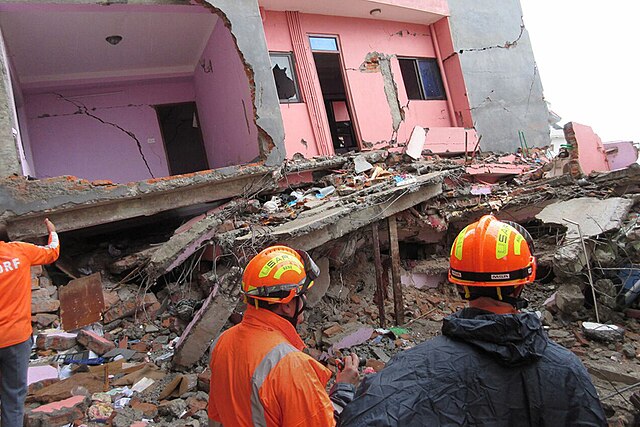
The world witnessed the consequences of this fragile situation in April 2015, when the devastating Gorkha earthquake shook the nation. Nearly 9000 people lost their lives, and centuries old heritage structures were reduced to rubble. Yet scientists warn that this disaster may have been only the beginning.
Geologists believe that a significant amount of accumulated stress beneath the surface has still not been released. This stored energy is creating the conditions for a future Great Himalayan Earthquake, a massive seismic event that could bring widespread destruction and severe environmental consequences.
Why Does Nepal Keep Shaking?
Nepal’s geography is both its greatest strength and its greatest vulnerability. The country is located precisely where two enormous tectonic plates collide. According to recent scientific findings, Nepal is extremely sensitive to earthquakes because the Indian plate continues to move northward beneath the Eurasian plate.
This process has been ongoing for millions of years and is responsible for the formation of the Himalayan mountain range itself. However, the same force that created these majestic mountains also makes the region dangerously unstable.
Recent tremors in Jajarkot and Rukum once again reminded the country of its vulnerability, claiming more than 160 lives. Even Prime Minister Pushpa Kamal Dahal Prachanda has acknowledged that Nepal’s geological structure makes it inherently susceptible to tectonic disturbances. These movements will not stop, which means the threat of earthquakes remains constant.
Is the Himalaya Truly a Seismic Hotspot?
Scientists consider the Himalayan region a major seismic hotspot due to its unique geological structure. The collision between the Indian and Eurasian plates is not minor or slow. The Indian plate is advancing toward the northeast at a rate of about 45 millimeters per year.
This steady pressure causes enormous energy to build beneath the Earth’s surface. Over time, rocks can no longer withstand the stress. When they finally fracture, the stored energy is released suddenly in the form of seismic waves. These waves travel outward and cause destruction on the surface.
The entire 2500 kilometer stretch of the Himalaya faces similar risks. For this reason, scientists identify the region as one of the world’s primary zones for high intensity earthquakes.
What Did the 2015 Disaster Teach Us?
The April 2015 Gorkha earthquake marked one of the darkest chapters in Nepal’s history. With a magnitude of 7.8, it inflicted severe human and structural damage. The Kathmandu Valley, the cultural and economic heart of the nation, suffered immense losses.
Ancient temples, historic buildings, and homes collapsed as if they were made of cards. Millions were left homeless, and infrastructure including schools, hospitals, and roads was badly damaged. Daily life came to a standstill.
The disaster demonstrated that when the ground shakes, both modern construction and centuries old heritage are equally vulnerable. It served as a powerful warning about the importance of earthquake preparedness in the region.
Is a Great Himalayan Earthquake Inevitable?
After 2015, the most pressing question was whether an even larger earthquake could occur. According to many scientists, the answer is deeply concerning. There is growing agreement within the scientific community that the threat of a Great Himalayan Earthquake still looms.
Experts suggest that despite its severity, the 2015 earthquake did not release all the stress accumulated beneath the Himalaya over centuries. Studies indicate that certain segments of the mountain belt still hold vast amounts of trapped energy. If released at once, it could trigger an earthquake of magnitude 8 or higher.
While precise prediction is impossible, historical records and tectonic monitoring suggest that a major seismic event in the future is not a matter of if, but when. It could happen tomorrow, next year, or decades from now.
The impact of earthquakes extends far beyond ground shaking. In the Himalayan region, seismic activity can trigger multiple secondary disasters.
Strong tremors can destabilize mountains, leading to massive landslides. These landslides may block rivers and create artificial lakes. When such lakes eventually burst, they unleash sudden outburst floods that devastate settlements, bridges, and fragile ecosystems downstream.
Earthquakes can also increase the risk of glacier collapse and avalanches. In this way, a single seismic event can set off a chain reaction of natural disasters.
Nepal’s landscape is as unstable and unpredictable as its weather. The uncertainty described above forces the country to remain constantly prepared for the moment when the mountains may tremble again.
Whether it involves strengthening infrastructure or improving disaster management systems, Nepal’s struggle is ongoing. The turmoil beneath the Earth is not merely a scientific phenomenon. It is the everyday reality of millions who call this region home.
The silent forces shaping the Himalaya continue their relentless movement. And for Nepal, preparedness is not a choice but a necessity.
Sources:
https://tinyurl.com/2bo5tlmj
https://tinyurl.com/25arlh9a
https://tinyurl.com/29yxhwog
https://tinyurl.com/22ebehra