


Timelines 10
Man and his Senses 10
Man and his Inventions 10
Geography 10
Fauna 10
Timelines 10
Man and his Senses 10
Man and his Inventions 10
Geography 10
Fauna 10
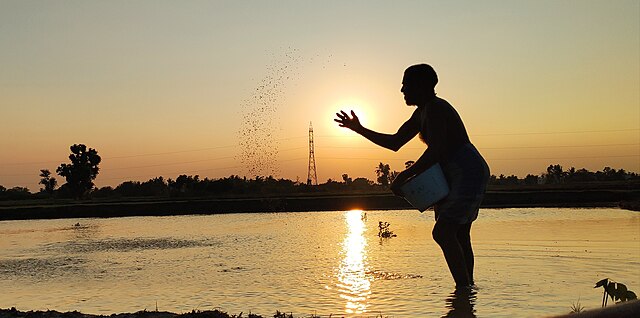
Imagine standing on the dusty frontier where India’s fertile plains meet the foothills of Nepal. The landscape here does not recognize the political borders drawn on maps. Instead, it follows the flow of rivers and the direction of seasonal winds. This is the shared Terai and Indo-Gangetic region, where the soil tells a story of survival and struggle that belongs equally to farmers on both sides of the border.
For centuries, rivers descending from the Himalayas have carried silt and sediment that nourished civilizations across this vast landscape. Yet today, this fertile inheritance faces a serious challenge, one that calls for coordinated action from both neighboring nations.
When we examine the geography of this region, we find a wide expanse of alluvial soil deposited by rivers flowing from the mountains into the plains. However, this soil is not uniform. Geologists classify it into two major types that form the agricultural foundation of the region: Khadar and Bangar.
Khadar refers to the newer alluvial soil found in low lying floodplains. Each year, floodwaters deposit fresh layers of nutrient rich silt that renew its fertility. This light colored, sandy soil retains moisture effectively and is considered highly suitable for intensive cultivation.
Bangar, by contrast, represents the older alluvial soil located on higher ground above the flood prone areas. Floodwaters rarely reach these lands. It tends to be darker in color, contains a greater proportion of clay, and often includes calcium carbonate nodules locally known as kankar. For generations, farmers in both India and Nepal have relied on a balance of cultivation across these two soil types.
In Nepal’s Terai region, soil classification follows a similar pattern. The composition and characteristics of the soil are shaped directly by the activity of Himalayan rivers. Studies show that Nepal’s soils display variations comparable to Khadar and Bangar, each suitable for different crops. The crisis begins when this delicate natural balance is disturbed.
Why Is This Land Losing Its Skin Every Year?
The fertile fields gradually give way to alarming statistics. The agricultural barrenness crisis did not emerge overnight. Scientific data shows that Nepal, along with adjoining regions of India, is experiencing soil erosion on a worrying scale. Nepal loses an average of about 1.7 millimeters of topsoil each year. While this figure may seem small, nature takes hundreds of years to form just one centimeter of soil.
One of the main drivers of this erosion is land use change. Scientific research comparing forest land with agricultural land in Nepal’s Terai region shows that converting forests into farmland significantly reduces soil quality. Forest soils, rich in organic matter and nutrients, begin to degrade rapidly once cultivation starts. As nutrients decline, the soil weakens and becomes more vulnerable to being washed away during heavy rainfall.
In watersheds such as Khajuri in the Shivalik hills, the situation is even more severe. Large volumes of soil are carried into rivers every year. This erosion not only damages the hillsides but also raises riverbeds in the plains, increasing the risk of floods. Fields that once produced abundant harvests are slowly turning into barren, sandy stretches.
How Is Gold Growing from Dry Riverbeds?
Yet this is not only a story of decline. From within the crisis, a powerful example of resilience has emerged in the form of riverbed farming. Reports from the United Nations Development Programme show how farmers in Nepal’s Terai have transformed disaster into opportunity.
Land that once turned into sandy wasteland after floods is now being used to grow watermelons, cucumbers, tomatoes, and gourds. Locally known as bagar farming, this practice has revived areas in districts such as Mahottari and Dhanusha that were once considered unproductive.
Behind these successes are stories of determination. Women like Phulo Devi, who previously owned no land, now cultivate crops along riverbanks and have achieved financial independence. She has not only supported her family but also purchased bicycles so her daughters can attend school. Young farmers such as Dil Kumari Rai are adopting tunnel farming techniques to grow off season vegetables and obtain better prices in local markets. Rivers that once brought destruction are now becoming a foundation for new prosperity.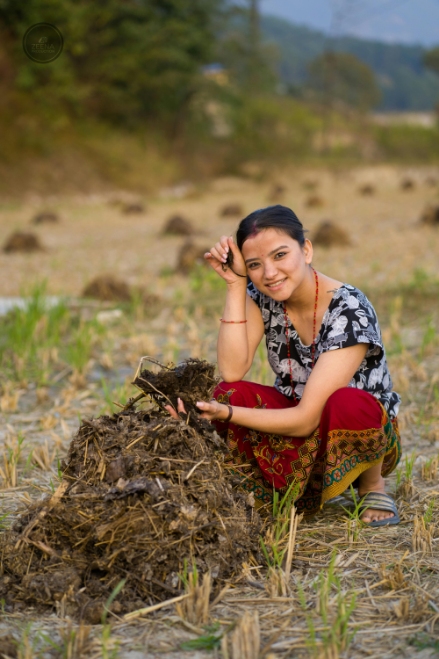
What Is the Historic 2025–26 Agricultural Agreement?
Grassroots efforts are now being reinforced by strong diplomatic and scientific collaboration. India and Nepal have established a historic Agricultural Cooperation Framework for 2025–26, endorsed during the ninth Joint Agriculture Working Group meeting in Kathmandu. This agreement aims to restore productivity to lands that are gradually becoming barren.
Under this framework, the Indian Council of Agricultural Research and the Nepal Agricultural Research Council will work together to develop climate resilient seeds and modern farming technologies. Farmers could soon benefit from crop varieties capable of surviving both drought and floods, along with access to improved soil testing facilities. Such innovations have the potential to significantly transform agricultural practices across the region.
The agreement also highlights the importance of digital agriculture, ensuring that farmers receive timely weather updates and market information. As part of India’s Neighborhood First policy, India has pledged support for Nepal in agricultural research and infrastructure development. Both countries have also agreed to streamline the supply of chemical fertilizers and align food quality standards.
This cooperation is vital because the challenges facing the region are shared. When rivers, climate, and soil connect two countries so closely, solutions cannot remain confined within national boundaries. In many ways, diplomacy is now unfolding not only in conference halls but also across the farmlands where farmers work every day.
As this journey concludes, one truth becomes clear. The health of the soil along this frontier will shape the well being of the people who depend on it. The annual loss of 1.7 millimeters of topsoil is not just a statistic; it is a warning for the future.
Yet the determination of farmers such as Phulo Devi and the promise of the 2025–26 agricultural framework show that hope remains. When science, public policy, and the resilience of farmers come together, even degraded land can recover its fertility. Reviving this shared landscape is no longer simply an environmental challenge. It is essential for securing a stable and prosperous future for India and Nepal, whose roots continue to grow from the same soil.
Sources:
https://tinyurl.com/2m679eyf
https://tinyurl.com/25km2fob
https://tinyurl.com/2b6fjoh7
https://tinyurl.com/2ctdppbg
https://tinyurl.com/2y65b7gl
https://tinyurl.com/26dloayo