


Timelines 10
Man and his Senses 10
Man and his Inventions 10
Geography 10
Fauna 10
Timelines 10
Man and his Senses 10
Man and his Inventions 10
Geography 10
Fauna 10
The relationship between India and Nepal is not written only in diplomatic documents. It is carved into the flow of rivers that descend from the Himalayas and nourish the plains. Rivers such as the Kosi and the Gandaki originate in Nepal’s mountains and stand at a complex crossroads. They sustain life, yet they also bring destruction. Nepal, as the upstream country, holds enormous hydropower potential capable of lighting much of South Asia. India, located downstream, depends on the same waters for drinking supplies and irrigation. This interdependence has both promise and tension.
Pokhara and Phewa Lake: How Nature Shaped a Valley 800 Years Ago?
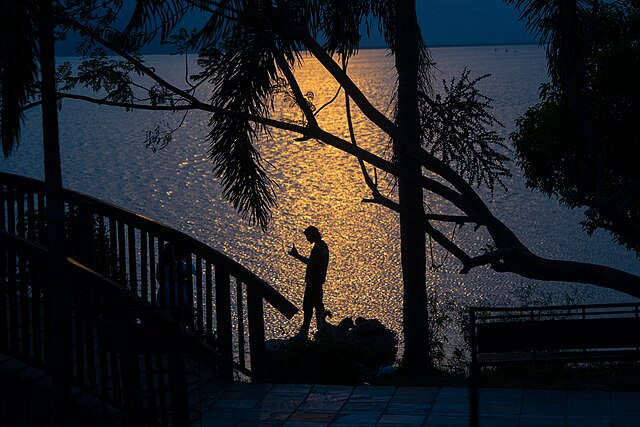
To understand the power and instability of these rivers, we must look at Pokhara, one of Nepal’s most beautiful cities. What is now considered a tourist paradise was formed by a dramatic geological event. Research shows that around 800 years ago, a massive collapse occurred in the Annapurna mountain range. A huge mass of rock and debris broke off from Annapurna IV and thundered down into the valley.
The debris was so extensive that it blocked the Seti River, causing water to accumulate and form lakes. Phewa Lake was born from this event. The flat land of Pokhara today rests on those ancient deposits. Scientific studies confirm that the fragile and evolving geology of the Himalayas causes heavy sediment flow in rivers. This sediment later creates serious challenges for downstream plains.
Why Is the Kosi Called the Sorrow of Bihar?
When heavy rainfall hits the unstable Himalayan valleys, its impact is felt across the border in India. This phenomenon is often described as a flood paradox. Rain falls in one country, and floods occur in another. The Kosi River is frequently called the Sorrow of Bihar, and recent data reinforces this reputation.
A detailed report reveals that during 2024 and 2025, Bihar experienced severe flooding. Water discharge from the Kosi and Gandak barrages broke records set decades earlier. The Kosi barrage released the highest volume of water since 1968, while the Gandak surpassed levels last seen in 2003. Torrential rain in Nepal’s hills sent massive volumes of water rushing downstream, inundating villages in India. These events demonstrate how closely the two countries are linked by geography and water flow.
Why Are Fields Still Thirsty Three Decades After the Mahakali Treaty?
To manage and share water resources, India and Nepal have signed several agreements, including the Mahakali Treaty of 1996. The treaty aimed to ensure equitable sharing of the Mahakali River, known as the Sharda in India. It outlined arrangements for water and electricity distribution through the Tanakpur and Banbasa barrages.
However, a ground report from January 2026 tells a different story. Nearly thirty years after the treaty’s implementation, many farmers in Nepal have yet to receive irrigation water from the Tanakpur barrage. Technical hurdles and political delays have stalled canal construction. In some areas where canals exist, water still does not flow. This gap highlights the difference between commitments on paper and realities on the ground.
Can Hydropower Become the New Light of Cooperation?
Amid recurring floods and irrigation challenges, hydropower offers hope. Nepal’s rivers hold immense energy potential. According to the Asian Development Bank, hydropower development in Nepal could reduce poverty domestically and supply clean energy across South Asia. Properly harnessed, floodwaters could be converted into electricity.
Recent developments show progress in this direction. Toward the end of 2025, India and Nepal signed an important agreement to expand electricity trade. Two new 400 kV cross border transmission lines will be constructed to carry surplus electricity generated in Nepal to India. This cooperation can strengthen Nepal’s economy while meeting India’s growing energy needs.
Experts caution, however, that balance is essential in this hydropower relationship. A scientific study published in 2026 notes that while the economic benefits are clear, concerns about hydro-hegemony also persist. Both nations must therefore ensure that water and energy cooperation is grounded in equality, transparency, and mutual trust.
What Do Melting Glaciers Signal for the Future?
Climate change adds another layer of urgency. A World Bank report warns that Himalayan glaciers, which feed the Kosi and Gandaki systems, are melting rapidly. Rising temperatures and black carbon deposits are accelerating glacial shrinkage.
Initially, faster melting may increase flood risks. Over time, however, reduced glacier mass could lead to declining river flows. This scenario threatens the regional resilience of both countries. In the future, water may become not just an issue of irrigation or electricity, but of survival itself.
The rivers connecting India and Nepal carry both opportunity and warning. Their shared management will determine whether these waters remain a source of prosperity or become a source of conflict.
Sources:
https://tinyurl.com/2bhrbygg
https://tinyurl.com/2y3tzkfd
https://tinyurl.com/2xrbq69k
https://tinyurl.com/24qvucdf
https://tinyurl.com/24py8z29
https://tinyurl.com/2229refu
https://tinyurl.com/27y79gha
https://tinyurl.com/26enjq38
https://tinyurl.com/26f4ol5o
https://tinyurl.com/28yp9zu8