


Timelines 10
Man and his Senses 10
Man and his Inventions 10
Geography 10
Fauna 10
Timelines 10
Man and his Senses 10
Man and his Inventions 10
Geography 10
Fauna 10
India and Nepal’s story does not begin in government offices or on political maps. It begins deep beneath the earth’s surface, where massive rock formations collided millions of years ago. Geography shaped this relationship long before history refined it.
Millions of years ago, the Indian and Eurasian tectonic plates crashed into each other. That collision gave birth to the world’s tallest mountain range, the Great Himalaya. But this was not a one time event. It is an ongoing slow motion collision that continues even today. This constant geological movement has permanently tied the land of India and Nepal together. At the same time, it has made the region highly prone to earthquakes.
When these enormous plates shift beneath the surface, the land above trembles. Geologists explain that this tectonic collision is the reason the region remains extremely seismically sensitive. History confirms that whenever the Himalayas shake, both Kathmandu in Nepal and Bihar in India feel the impact equally.
The devastating earthquake of 1934 remains one of the strongest examples. The disaster did not only rattle Nepal’s capital, Kathmandu, but also caused massive destruction in India’s Bihar state. It served as a stark reminder that the land beneath both countries is physically connected. Scientists emphasize that seismic cycles do not respect national borders. Any movement in Nepal’s mountains directly affects India’s plains.
Why Is the Himalaya Called the Third Pole?
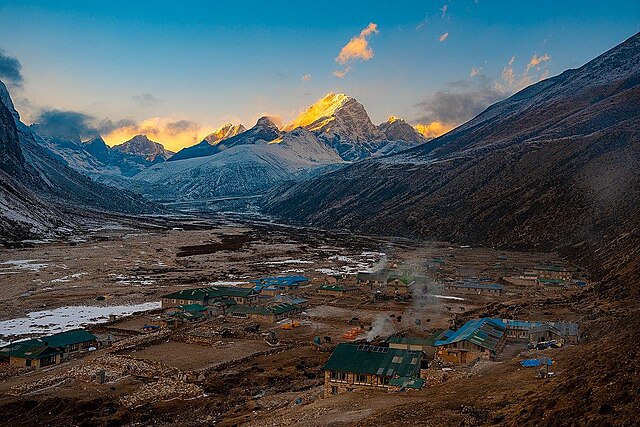
The connection between these two nations is not limited to trembling land. Flowing water is another powerful shared legacy. The Himalaya is often called the Third Pole because, after the North and South Poles, it holds the largest reserve of ice in the world. These mountains contain thousands of glaciers.
These glaciers are not just frozen masses. They function like a massive water tower for the entire region. As they melt, the water forms streams that eventually grow into mighty rivers such as the Koshi and the Gandaki.
These rivers carry far more than water. They sustain millions of farmers from Nepal’s hills to India’s fertile plains. Agriculture, drinking water supplies, and even hydro power generation in both countries depend heavily on these shared rivers. This continuous flow of water shows how nature has woven the futures of India and Nepal into a single thread.
However, this vital water tower now faces serious threats. Climate change and rising temperatures are directly affecting Himalayan glaciers. Experts warn that accelerated glacier melting and the accumulation of black carbon could pose major economic and security challenges for both nations.
Historical water sharing agreements further demonstrate how closely the destinies of these neighbors are linked. If glaciers melt too quickly, flood risks will increase. If they shrink drastically, water shortages will impact communities on both sides of the border. Environmental challenges are no longer isolated issues. They are shared realities.
How Faith and Tourism Are Opening New Pathways?
Beyond geology and rivers, shared history continues to breathe through these mountains. The relationship between India and Nepal extends beyond geography and water. It also thrives through faith and tourism. Modern infrastructure is transforming ancient pilgrimage trails into accessible travel routes that people have walked for centuries.
Religious circuits connected to the Ramayana and to the life of Buddha are linking sacred sites across both countries. From Nepal’s Muktinath temple to India’s holy cities, these spiritual routes are growing stronger. The Buddhist circuit allows pilgrims to travel across locations associated with the life of Lord Buddha, often crossing the international border in the process. For many travelers, this is not merely tourism. It is a journey to reconnect with cultural and spiritual roots.
Recent tourism data reflects the warmth of this relationship. A 2026 report highlights that in 2025 Nepal’s tourism industry recovered to 96.8 percent of its pre pandemic level, showing a modest but encouraging rise. This movement of people demonstrates that despite changing times and circumstances, the deep social bond between India and Nepal remains alive.
Visitors do not travel only to see mountains. They come to nurture relationships that have existed for centuries. Shared geological history, interconnected river systems, and spiritual traditions have together shaped a future filled with possibilities for joint tourism and development. The tectonic forces that shape the land and the mountain pathways that bring people closer together both define the true essence of the India Nepal story.
Sources:
https://tinyurl.com/2xwkegrm
https://tinyurl.com/29xwe4eq
https://tinyurl.com/2ywh7a3t
https://tinyurl.com/2bhrbygg
https://tinyurl.com/2ahxg6a8
https://tinyurl.com/262dt3nn
https://tinyurl.com/y9tohge6