


Timelines 10
Man and his Senses 10
Man and his Inventions 10
Geography 10
Fauna 10
Timelines 10
Man and his Senses 10
Man and his Inventions 10
Geography 10
Fauna 10
In the 8th century, a philosophical wave swept across the Indian subcontinent and permanently altered the course of religion and thought. This movement was led by Adi Shankaracharya, a young monk from Kerala. This article documents his incredible journey from the tropical coasts of the south to the icy peaks of Nepal. We will explore how his travels wove the geography of India and Nepal into a single tapestry of faith. Simultaneously, we look at the story of great universities like Nalanda and Vikramshila, which once served as the intellectual beacons of Asia. When invaders destroyed these centers in the 12th century, the light of knowledge did not fade but instead found sanctuary in the Himalayas. This is a story of a remarkable harmony where Shiva and Buddha came to be worshipped side by side.
Why did a young monk from Kerala travel to the Himalayas?
History records that Adi Shankaracharya was born in the southern state of Kerala, yet his influence resonated across the entire subcontinent. According to biographies from the Chinmaya International Foundation, he embarked on a "Digvijaya" or a conquest of the directions. This was not a victory won through weapons but through the power of logic and philosophy. During his travels, he established monasteries in the four corners of India before heading toward the Himalayas. His journey was more than just a physical trek because it was a mission to revive Vedic wisdom. He reached Kedarnath and eventually the Kathmandu Valley in Nepal. His travels prove just how expansive and interconnected the cultural landscape of the 8th century truly was.
Why are the priests at Pashupatinath Temple from South India?
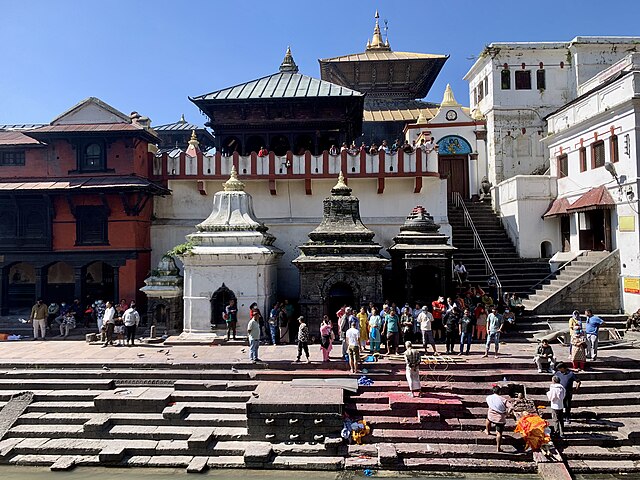
Located in Kathmandu, the Pashupatinath Temple is among the holiest sites in Hinduism, yet its rituals hold a fascinating historical secret. Records suggest that when Adi Shankaracharya arrived in Kathmandu, he organized the temple's worship practices. He established a rule that the head priests, known as "Bhattas," must be Brahmins specifically from South Indian states like Karnataka, Kerala, or Andhra Pradesh. This tradition remains alive centuries later. It does more than just show the influence of Shankaracharya because it serves as living proof of the deep cultural and religious bonds between India and Nepal. Every time a South Indian priest chants at this Nepalese temple, he unknowingly recreates that 8th century journey that bound the two nations together in faith.

What was the atmosphere like in ancient India's "Oxford and Cambridge?
While Shankaracharya was traveling, a different world of learning thrived in Eastern India. Nalanda and Vikramshila universities were the "Oxford and Cambridge" of their time. These institutions were magnets for students and scholars from all over Asia. A vibrant culture of "Shastrartha" or formal debate flourished within these walls. Buddhist and Vedantic scholars would challenge each other's reasoning to sharpen their intellectual skills. It was an era when knowledge was tested by dialogue and logic rather than force. The legacy of Nalanda provided the world with priceless contributions to logic, philosophy, and science while playing a vital role in spreading knowledge northward.
What was the relationship between Shankaracharya and Buddhist scholars?
History often depicts the relationship between Adi Shankaracharya and Buddhist scholars as a period of intense conflict. Some historical accounts and modern analyses examine these debates critically. It is true that Shankaracharya challenged Buddhist philosophy with his arguments and won many formal debates. However, this struggle was intellectual rather than violent. These debates forced both sides to make their principles more precise and logical. As we see later, this ideological clash on Indian soil took on a completely different form once it reached the valleys of Nepal.
Why did knowledge seek refuge in the Himalayas during the 12th century?
The 12th century brought a dark chapter to Indian history. Invaders destroyed the great universities of Nalanda and Vikramshila. Libraries were burned, and monks had to flee for their lives. Yet, a story of preservation was hidden within this destruction. Research from academic journals indicates that the migration of monks from Magadh in modern Bihar happened through cross Himalayan networks. These monks did not leave empty handed because they carried precious manuscripts and ancient wisdom with them to Nepal and Tibet. These difficult mountain paths saved Buddhist philosophy from being lost and brought it to a safe new home.
How did trade routes help save ancient wisdom?
This transfer of knowledge was no accident. The trade routes connecting India, Nepal, and Tibet played a crucial role. These paths were used for more than just trading spices and silk because they also facilitated the movement of translators and scholars. When a crisis hit India, these routes were used to physically transport wisdom across the mountains in the form of manuscripts and religious art. Translators converted Sanskrit texts into local languages to protect them. This ensured that the wisdom survived even after the original sources in the plains were destroyed.
How are Shiva and Buddha worshipped together in Nepal?
After reaching Nepal, Indian philosophy underwent a unique transformation. While Hindu and Buddhist philosophies were often viewed as separate or even opposing in India, Nepal created a beautiful synthesis of the two. Research papers show that the Kathmandu Valley became a sort of philosophical laboratory. An environment of religious tolerance and syncretism developed there, leading to the practice of worshipping Shiva and Buddha in the same temple. Many deities are shared between the two religions. One of Nepal’s distinctive qualities has long been its spirit of acceptance rather than rigid adherence to dogma. In this sense, the Himalayas did more than simply shield the region from cold winds; they also protected and preserved the enduring light of ancient Asian wisdom for the wider world.
Sources:
https://tinyurl.com/2a7ldvv9
https://tinyurl.com/27qqhwmy
https://tinyurl.com/2bslyvqd
https://tinyurl.com/2awu6vou
https://tinyurl.com/26dc874h
https://tinyurl.com/2yk2fzrg