


Timelines 10
Man and his Senses 10
Man and his Inventions 10
Geography 10
Fauna 10
Timelines 10
Man and his Senses 10
Man and his Inventions 10
Geography 10
Fauna 10
In the misty hills of the Himalayas where cold winds blow, a certain fabric tells the story of a shared heritage between two nations. This story takes place between the 17th and 19th centuries when the art of weaving created a bond between India and Nepal that transcended borders. The world knows this fabric as Dhaka. It might seem strange that a fabric considered the pride of Nepal is named after Dhaka, a city in modern Bangladesh and what was then undivided India. However, historical records show this was no coincidence. This was an era when the textile trade in the Indian subcontinent was at its peak and art was not bound by maps. Today we will explore this history that began in the warm plains of Bengal and the alleys of Banaras to reach the cool climate of the Palpa district in Nepal.
Why is a fabric considered the symbol of Nepal named Dhaka?
People often wonder why the Nepali hat or cloth is called Dhaka. The answer lies in the ancient trade routes that once connected Bengal to the Himalayas. Dhaka, which is now the capital of Bangladesh, was the center for fine muslin and cotton fabrics at that time. In the 18th and 19th centuries, muslin and specially woven fabrics coming from Dhaka were extremely popular among the elite and the Rana rulers of Nepal. This cloth was so fine and magnificent that it was viewed as a symbol of prestige. Gradually, the fabric woven in Nepal inspired by this technique and style also came to be known as Dhaka. This name serves as a reminder of a time when the textile industry of the Indian plains directly influenced Himalayan culture.
How did this art travel from the streets of Banaras to Palpa in Nepal?
This art did not reach the mountains suddenly because it involved a long journey. According to the official history of the Palpali Dhaka Association, this weaving art arrived in Nepal through skilled artisans and migrants from India. Toward the end of the 19th century, specifically around the 1890s, this art began to take root in the Palpa district of Nepal. Palpa was a major trade stop between India and Nepal and it soon became the hub for this new weaving style. Artisans here adopted Indian techniques but filled them with their own local colors and forms. They learned to use Jacquard looms and eventually the Dhaka fabric made in Palpa became famous throughout the region for its quality and durability.
Did royal fashion from Banaras influence the design?
There has always been a deep relationship between the royal family of Nepal and the cultural city of Banaras or Varanasi. The sarees and brocade weaving art of Banaras were famous worldwide. The Rana rulers of Nepal and members of the royal family often visited Banaras. Many Nepalese queens and noblewomen lived in Banaras and were fond of the fine fabrics produced there. They liked the elegance and intricate weaving of Banaras so much that they brought those tastes back to Kathmandu. It is believed that this royal preference influenced the design of Dhaka fabric in Nepal. The magic of complex weaving and silk threads from Banaras began to appear in the patterns of Nepalese Dhaka, turning this cloth from ordinary to extraordinary.
How did Mughal art and mountain geometry come together?
The greatest feature of Dhaka fabric is its design. If you look closely, you will see the meeting of two different worlds. In North India, Mughal rulers popularized floral motifs and nature paintings on cloth. This style of Mughal tapestry gradually moved toward the Himalayas. Artisans in Nepal combined these Mughal floral designs with their own traditional geometric patterns from the mountains. The new form that emerged from this mixture was wonderful. It possessed neither the complete softness of the Mughals nor the roughness of the mountains but instead offered a balanced beauty of both. This unique union is what makes Dhaka fabric distinct and special from other textiles today.
How did the Swadeshi movement save this dying art?
In the early 20th century, the handloom industry faced a crisis when the British began introducing cheap machine made clothes in India. According to research, the inexpensive production from British mills broke the spirit of traditional weavers. However, at this time, Mahatma Gandhi sounded the trumpet of the Swadeshi movement in India. He called for a boycott of foreign clothes and encouraged the use of the spinning wheel and handloom. The echo of Gandhi’s call reached Nepal. Social reformers in Nepal like Tulsi Meher Shrestha took inspiration from Gandhi and started a campaign for the spinning wheel. They realized that if they wanted to save their culture, they had to save their looms. This movement gave a new life to Dhaka weaving in Nepal and transformed it from just a piece of cloth into a symbol of self reliance.
How did the Dhaka hat become a symbol of national pride?
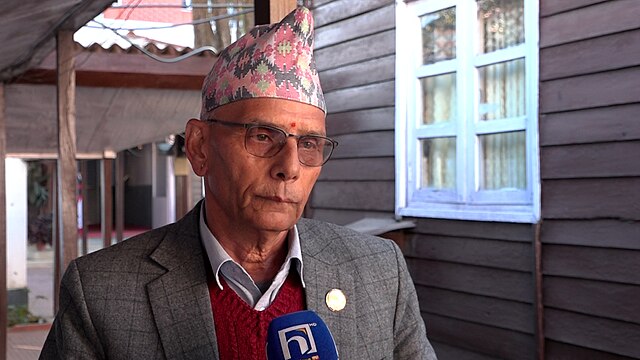
Gradually, this fabric became the crown of the head. For Nepalese people, the Dhaka hat is not just a means to cover the head because it has become a marker of their national identity. This hat is a witness to the shared history that weavers from India and Nepal wrote together. During the reign of King Mahendra between 1955 and 1972, wearing the Dhaka hat was made a mandatory part of the national dress, which increased its popularity even further. Today, this hat is worn with pride during events like Topi Day. It not only reflects Nepalese self respect but also preserves the old memories of when the lives of people in Palpa and Banaras were tied together.
Is this tradition still alive today?
Moving out of the pages of history, Dhaka fabric has entered a new era. A recent report from the Kathmandu Post in February 2025 states that modern designers are reviving this ancient art. The use of Dhaka is no longer limited to hats or blouses because it is now being used to make coats, ties, and modern garments. These designers of the new age are honoring old techniques while filling them with the colors of today. This revival proves that this shared heritage of India and Nepal is not something to be kept in a museum but is a living tradition that is becoming even more refined with time.
Sources:
https://tinyurl.com/27xvs3ux
https://tinyurl.com/28rlr2th
https://tinyurl.com/2aumg2xj
https://l1nq.com/Prarang
https://tinyurl.com/22zbl8ta
https://tinyurl.com/26worqjt
https://tinyurl.com/26vknalk