


Timelines 10
Man and his Senses 10
Man and his Inventions 10
Geography 10
Fauna 10
Timelines 10
Man and his Senses 10
Man and his Inventions 10
Geography 10
Fauna 10
In today's world, luxury is often defined by designer brands and expensive cars, but centuries ago, the true measure of opulence was scent. Between 300 BCE and 1200 CE, before modern maps existed, the warm plains of India and the icy peaks of Nepal were tied together by an invisible thread. This connection was not made of silk or iron but of fragrance. Historians refer to this as the Fragrant Path or the Musk Routes. It was an era when the Himalayas were the world’s treasury for musk while India was the center for sandalwood and agarwood. Caravans of merchants risked their lives to cross treacherous terrain just to please the gods and scent the courts of kings.
What was the musk deer and the Tibet Nepal musk route?
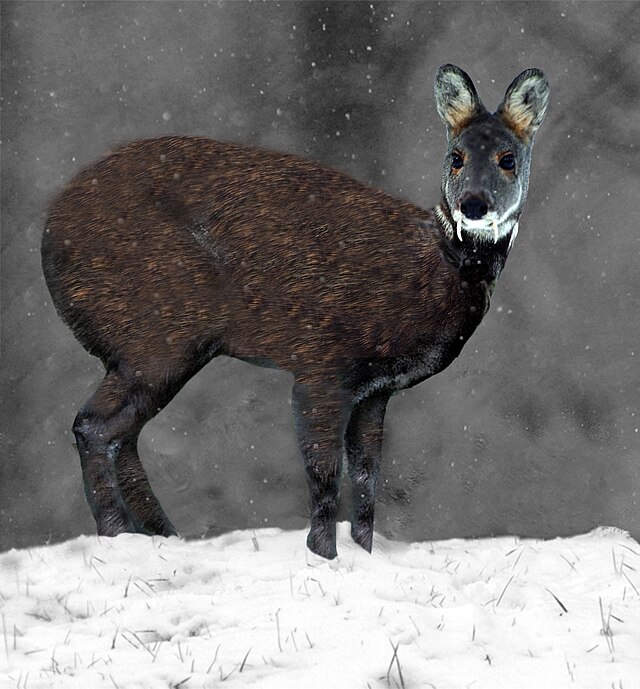
In the lap of the Himalayas, particularly on the high plateaus of Nepal and Tibet, lives a unique creature called the musk deer. A gland in the navel of this shy animal produces a fragrance known as musk, which was one of the most precious items of the ancient world. The trade in musk was so significant that it birthed specific trade routes connecting Nepal and Tibet to the rest of the world, which were known as the Musk Routes. Collecting musk was a difficult task because it came from deer living in high altitude regions, and hunters often faced extreme conditions. From the mountains, this musk traveled through narrow valleys and passes to reach the markets of the Indian subcontinent. This scent was more than just perfume because it was the axis of the economy at that time.
Which paths did traders take to bring this fragrance to India?
This trade was not a one way street but rather a complex exchange of cultures and currencies. Research indicates that the trade of musk between Tibet and Nepal was well organized. Merchants descended from the difficult Himalayan paths carrying musk pods. They brought these valuable items to ancient Indian capitals such as Varanasi and Pataliputra. For the traders on these routes, musk was not just a commodity but also functioned as a currency. Many times, they traded musk for grain, cloth, or other essential goods. This exchange was so deep that it fostered a shared culture in the border regions of Nepal and India where fragrance became a symbol of social status.
What was Gandhayukti, the ancient Indian science of perfume making?
When this musk arrived at the courts of Indian kings, how was it utilized? To understand this, we must look at the ancient Indian science called Gandhayukti. This was not merely the art of making scents but a comprehensive discipline. Gandhayukti involved methods for blending fragrances, determining their proportions, and creating various types of perfumes, incense, and pastes. It was a part of daily life for kings and queens who used it not only to scent themselves but also to keep the palace environment pure and pleasant. In temples, Gandhayukti held special importance for the worship of deities. It was believed that a correctly prepared fragrance would please the gods and purify the surroundings.
What moved from India toward the Himalayas in return?
Trade is never one sided. When musk came down from Nepal, merchants returned with a gift from India known as sandalwood. Sandalwood has been a major trade product of India since ancient times. Scientific research shows that the sandalwood tree was prized not only for its fragrance but also for its medicinal properties. In Ayurveda, it is considered cooling. People from the Himalayas who sent hot aromatic substances like musk would take back cool sandalwood. Sandalwood was used in religious rituals, for applying tilak on the forehead, and in various medicines. Both its wood and oil were considered high quality and were seen as symbols of purity.
Was there a special fragrance reserved for the gods?
Besides sandalwood, another aromatic wood that deeply influenced the religious life of India and Nepal was agarwood. Research suggests that the journey of agarwood began in South East Asia and reached the temples of India. It is also called the Wood of the Gods. In ancient times, agarwood was used during meditation and spiritual practice to increase concentration. When burned, the smoke it releases calms the mind. Burning agarwood incense in the temples of India and Nepal became a daily ritual. It was believed that its scent carried prayers to heaven. In this way, agarwood connected physical trade with spiritual heights.
How did these scents serve as ancient medicine?
The goods coming from the Himalayas were not limited to luxury or worship. A study on the medicinal and aromatic plants of Nepal reveals that the Himalayas have been a treasure of herbs since ancient times. People in Nepal gathered not only musk from the forests but also many types of herbs and aromatic plants. These plants were the backbone of Indian Ayurveda and Tibetan medicine. Scent was not considered something that just smelled good but was seen as a form of therapy. These aromatic oils and herbs were used to treat various diseases. This tradition remains alive in rural Nepal where people still collect medicines from the forests for their livelihood and preserve centuries old knowledge.
What remains of that golden era today?
This unparalleled trade which lasted for centuries has left a deep mark on our culture, but the cost was paid by the creature at the center of it all which is the musk deer. Due to excessive hunting and habitat loss, this animal is now on the verge of extinction. However, a ray of hope remains. Recently, a musk deer was spotted in the Buxa Tiger Reserve in West Bengal after nearly 70 years. This rare sight is not only a joy for environmentalists but also reminds us of that ancient history when this creature determined the preferences of kings and emperors. Today, the incense sticks and perfumes in our homes are the legacy of that Fragrant Path which reminds us that there once existed a highway of scents between India and Nepal.
Sources:
https://tinyurl.com/246dr5pj
https://tinyurl.com/278cehgp
https://tinyurl.com/24bplqnl
https://tinyurl.com/2dj7mcqw
https://tinyurl.com/2dn3xygb
https://tinyurl.com/228kzv6e