


Timelines 10
Man and his Senses 10
Man and his Inventions 10
Geography 10
Fauna 10
Timelines 10
Man and his Senses 10
Man and his Inventions 10
Geography 10
Fauna 10
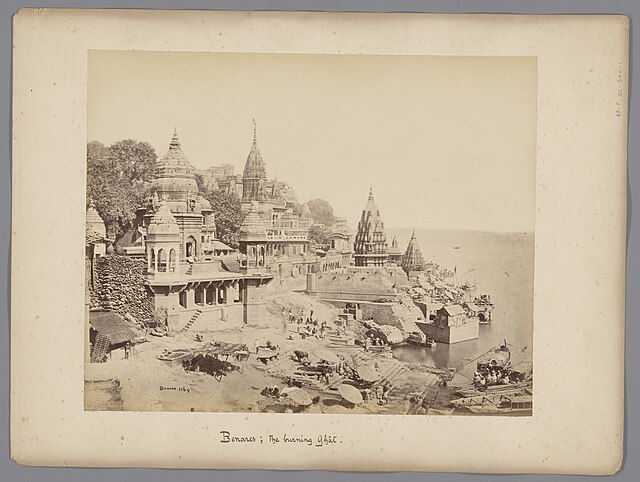
In the nineteenth century, India was experiencing the steady expansion of British rule while Nepal remained largely isolated under the Rana dynasty. Yet, amidst these political shifts, the ancient city of Banaras became the silent witness to a different kind of uprising. This was not a revolution fought with weapons but with words, ink, and the power of the printing press. Historical records reveal that the narrow streets of this city served as the birthplace for both modern Hindi and the Nepali language at nearly the same time. This is the story of how Banaras gave a new identity to the voices of two nations.
Why did Banaras become a bridge between two nations?
Banaras was far more than a center for spiritual seeking. It evolved into a sanctuary for literature and learning. Just as the city held immense religious significance, it became a site of literary pilgrimage for Nepali scholars. Research by scholar Roderick Chalmers suggests that Banaras was essentially the cradle of modern Nepal because it served as the hub for the Nepali publishing industry. A popular saying at the time claimed that if a story were not true, it would not have been printed in Kashi. This highlights the incredible credibility of the words published there. The city provided a unique stage where Indian intellectuals and Nepali writers could meet, exchange ideas, and refine their respective languages.
What arguments did the Father of Modern Hindi present?
Bharatendu Harishchandra, born into a prominent family in Banaras, is widely regarded as the Father of Modern Hindi. He was the first to realize that the country needed a standardized language to foster unity. Bharatendu challenged the prevailing dominance of Braj Bhasha and Urdu, arguing that Khari Boli, which is the basis of standard Hindi today, was the only tongue capable of uniting North India. Through his prolific plays and essays, he fostered a new cultural movement. He created a social framework among the elite and the merchants of Banaras where Hindi became a symbol of cultural identity. He firmly believed that no nation could progress without the advancement of its own language.
How did Nepal discover its literary identity?
While Bharatendu was advocating for Hindi, a young Nepali poet named Motiram Bhatta was equally active in Banaras during the 1880s. Research indicates a deep friendship between the two men. Inspired by Bharatendu, Motiram applied similar linguistic experiments to the Nepali language. He tracked down the original Ramayana written by the poet Bhanubhakta Acharya and had it printed in Banaras, allowing it to reach households across Nepal. The era from 1883 to 1919 is now known in Nepali literature as the Motiram Era. While living in Banaras, he launched Nepali magazines and elevated the language from a regional mountain dialect to a sophisticated literary tongue.
Why did both languages turn toward Sanskrit?
A striking similarity in the development of both Hindi and Nepali was their reliance on Sanskrit to establish authority and purity. As nationalist sentiments rose in the nineteenth century, a process of Sanskritization began. Proponents of Hindi argued that Sanskrit was the sacred language of the heritage and should be the primary source for vocabulary. Consequently, they replaced many Arabic and Persian words with Sanskrit terms to distinguish Hindi from Urdu. Similarly, the Nepali language, previously known as Gorkhali, moved its grammar and vocabulary closer to Sanskrit to establish itself as a national language. This process was not just about linguistics; it was an effort to craft a shared cultural identity.
How did the printing press change the course of the revolution?
The most effective weapon in this linguistic revolution was the printing press. Extensive reports show that print media played a crucial role in the rise of nationalism and the struggle for independence. The launch of the first Hindi newspaper in 1826 and the first Hindi novel in 1882 proved that the press was beginning to reshape public thought. These publications did more than criticize colonial rule; they provided a unified platform for a fragmented society. The presses in Banaras printed Nepali books in massive quantities, making literature accessible to the general public in Nepal for the first time. Without the printing press, the standardized versions of Hindi and Nepali we use today might never have existed.
Where do we stand today in this historical journey?
This shared linguistic evolution created a powerful bond between India and Nepal. The history of the Nepali language shows that its influence was never confined to the borders of Nepal alone. India has a significant population of Nepali speakers in regions such as Darjeeling, Sikkim, and Assam. Following a long period of advocacy, Nepali was officially included in the Eighth Schedule of the Indian Constitution in 1992. This recognition proves that the roots of the language are deeply embedded in Indian culture.
Today, this shared heritage continues to connect the two nations. A recent cultural festival in Lumbini celebrated this common bond through Buddhist heritage and art. Displays of sand mandalas and photography exhibitions serve as reminders that while borders may separate the two countries, their language, culture, and history remain intertwined. The legacy of Bharatendu and Motiram continues to thrive in the very streets where they once dreamed of a new era.
Sources:
https://tinyurl.com/2bz8ulte
https://tinyurl.com/2yfmhx39
https://tinyurl.com/26qsumyz
https://tinyurl.com/27e7u2kj
https://tinyurl.com/2bcwozjf
https://tinyurl.com/243cozrb
https://tinyurl.com/29lxbwtt