


Timelines 10
Man and his Senses 10
Man and his Inventions 10
Geography 10
Fauna 10
Timelines 10
Man and his Senses 10
Man and his Inventions 10
Geography 10
Fauna 10
From the plains of India to the foothills of Nepal, looking deeply into the design and architecture of houses reveals that the heartbeat of homes in both these nations is exactly the same. From the mud houses baked in the scorching sun of the Terai region to the highly complex and artistic wooden windows of the Kathmandu Valley, our shared architectural heritage is very deep and vast. Local materials used in these constructions like bamboo, stone, and red clay are not just lifeless building blocks. They represent a complete art of living passed down through generations. The Tharu architecture of the Terai region in Nepal offers the most accurate and excellent example of how humans and nature can live together in perfect harmony. Mud and bamboo are primarily used in the construction of these Tharu homes. This natural material acts as an excellent natural coolant and insulation to protect against extreme heat, keeping the houses forever cool inside. The most interesting and notable point is that this Tharu style of building environmentally friendly homes completely matches the design of traditional rural houses in North India, especially Bihar. These houses made of red clay and bamboo in both geographical regions are not merely brick and mortar buildings. They are living proof of our deep connection to that shared land and nature which threads both countries together.
What is the similarity between the intricate carvings of the mountains and the mansions of the plains?
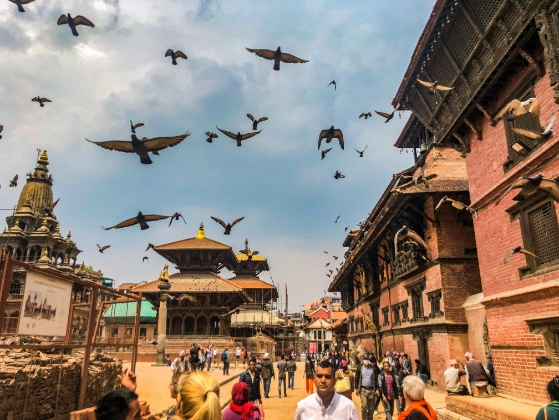
Moving away from the hot plains of the Terai and turning towards the mountains, a completely new, grand, and highly artistic form of architecture appears before our eyes. The Newari architecture of Nepal is famous among experts worldwide for its unique style and unmatched craftsmanship. The greatest identity of these traditional houses in the Kathmandu Valley is the extremely fine, complex, and beautiful wooden carving done on their doors and windows. The unparalleled use of wood, stone, and baked bricks in these historical buildings and pagoda style structures presents a magnificent and authentic specimen of centuries old art. When architectural experts look at these carved wooden windows and doors, they naturally compare them to the historical and grand mansions of India known as Havelis. Indian historical mansion designs also prominently featured finely carved wooden pillars, massive doors, and balconies. This amazing similarity between the Newar style of the mountains and these massive mansions of the Indian plains firmly confirms that the thinking, art, and aesthetic sense of craftsmen on both sides of the border have been interconnected for centuries.
Why is the open courtyard in the middle of these traditional houses so important?
From the grand mansions of India to the traditional mountain and plain houses of Nepal, if there is one thing most common and important, it is the open courtyard situated right in the middle of the house, also known as the Chowk. In the ancient architecture of both countries, this central courtyard is considered the most essential and sacred part of the home. This open and airy space acts like the lungs of any house, providing fresh air, light, and life energy to the entire structure. In the shared family cultures of India and Nepal, this courtyard is absolutely not just an empty space surrounded by bricks. Instead, it is the main center for large joint families to live together, converse, cook, and Share every small and big moment of life. People of many generations, from elders to children, have been sitting in this courtyard sharing their daily lives, joys, and sorrows. This is such a unique and scientific architectural design that not only protects the house from harsh weather but also historically works to keep all family members emotionally and mentally connected to each other with great strength.
How is the prayer room surviving even in modern urban apartments?
With the wheel of time, our lifestyle has changed rapidly, and traditional mansions or mud houses have now been replaced by modern, narrow, and multistory concrete apartments in cities. In this modern era, household furniture has completely changed, and the living style of people has also become westernized. But when we look at the design of these new houses, a question arises whether there has been any change in the core soul of the house. The very clear answer to this is no. Even in these highly modern and small apartments today, the prayer room remains the most sacred and essential corner of the house, which cannot be compromised at any cost. In both India and Nepal, no matter how small or modern the house is, having a dedicated spiritual space is still considered an essential part of family values. Modern interior designers today also understand this deep cultural need very well. They are including the prayer room in the design of contemporary homes in a very artistic, peaceful, and modern way. This corner of modern homes is the strongest proof that even amidst fast paced urban life, the people of both countries have firmly held onto their spiritual roots and deep faith.
It is often believed that modern architecture merely means copying the gleaming designs of western countries, but today young and urban interior designers are completely shattering this false notion. A massive and magnificent renaissance of traditional crafts, handlooms, and natural designs is being seen these days in India and Nepal. Instead of glass and heavy concrete, young designers are now returning to those natural and environmentally friendly materials that our ancestors used for centuries. To make modern homes beautiful and durable, a massive trend of using natural items like cane, jute, hand woven traditional textiles, and red oxide flooring has now begun. The intricate wooden carvings of Nepal and the handmade fabrics of India are now finding prominent places in urban homes as highly trendy and fashionable decorations. To meet this growing demand and give artisans of both countries a shared platform, the India Nepal Folk Craft Fair was recently organized successfully in Kathmandu, the capital of Nepal. Through such events, an active and cultural exchange of traditional crafts and artisans from both neighboring countries is taking place. Ultimately, this new era of home decoration fully proves that the future of interior design in India and Nepal does not lie in blindly copying the West. Instead, its real future lies in rediscovering that sustainable, grounded, and natural wisdom of our ancestors and applying it with respect today.
Sources:
https://tinyurl.com/26l7b6oo
https://tinyurl.com/2yj3lvxo
https://tinyurl.com/25jj2r9z
https://tinyurl.com/2c9zsd3g
https://tinyurl.com/236yrxak
https://tinyurl.com/25zd5wj7
https://tinyurl.com/22pelge7