


Timelines 10
Man and his Senses 10
Man and his Inventions 10
Geography 10
Fauna 10
Timelines 10
Man and his Senses 10
Man and his Inventions 10
Geography 10
Fauna 10
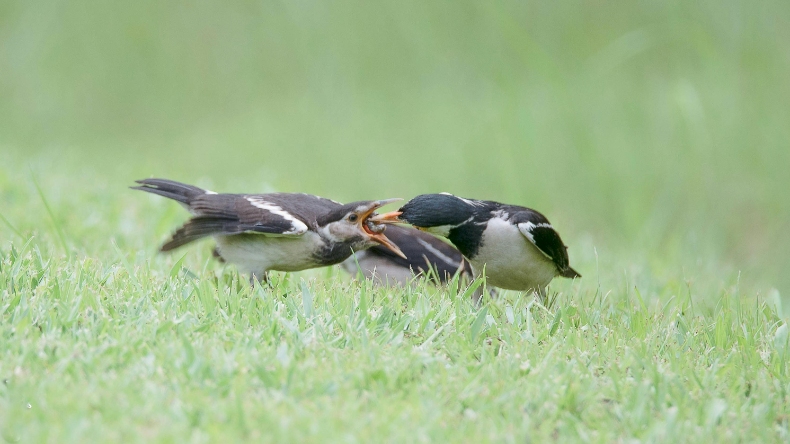
Imagine standing amidst the lush and fertile plains that bridge the borders of India and Nepal as a striking black and white bird takes flight before you. This is the Asian Pied Starling, known scientifically as Gracupica contra. Soaring freely across the Ganges plains, this small bird is far more than a common sight. It weaves a living narrative of shared ecology and cultural harmony between two nations. Its life story takes us on a journey through fields and forests where political boundaries vanish and an unbreakable bond with nature begins. This article offers a vivid and detailed look into the mysteries of this South Asian treasure, exploring its cultural impact and the looming threats to its future.
What defines the physical appearance and range of this bird?
The Asian Pied Starling is easily recognized from a distance by its bold black and white plumage. Its upper body and throat are a deep charcoal black, while its cheeks, chest, and underparts are a brilliant white. The beak is particularly distinctive, featuring a reddish base that transitions into a bright yellow tip. A patch of orange or red bare skin circles the eyes, adding to its unique beauty. This bird is found across a vast portion of the Indian subcontinent, primarily settling in lowland areas where water and agricultural land are plentiful. Its distribution and classification demonstrate its remarkable ability to adapt to diverse geographical conditions.
How do these birds build their nests and interact socially?
The social behavior of these birds is incredibly engaging and quite noisy. They are naturally gregarious and prefer to live in large, communal flocks. When they gather in trees, the air is filled with their loud and synchronized chirping. During the breeding season, their behavior becomes even more fascinating. They choose to live in close proximity to human settlements, often building their homes in trees or on utility poles near houses. Their nests look like large and somewhat messy domes made of grass, twigs, and leaves. While these structures might appear cluttered, they provide a very secure and sturdy shelter that protects their young from harsh weather and predators.
What is the open bill technique and how does it aid in hunting?
When searching for food, the Pied Myna employs a highly intelligent and unique method called the open bill or gaping technique. The bird inserts its closed beak into the soil, grass, or piles of dry leaves and then forcibly opens it while underground. This action pushes aside the dirt or debris, exposing hidden insects, larvae, and earthworms. This clever strategy allows them to access prey that other bird species often miss. Their primary diet consists of these small creatures, making them exceptionally skilled and efficient hunters.
Why are they considered the best friends of farmers in Lumbini and Koshi?
Scientific studies conducted in major agricultural hubs like Koshi and Lumbini in Nepal have proven that the Asian Pied Starling is a vital component of the rural ecosystem. These birds are a true blessing for farmers. Because of their specialized hunting methods, they consume vast quantities of harmful pests that would otherwise destroy crops. By naturally controlling insect populations, these birds save farmers from the need for expensive and toxic chemical pesticides. In this way, they do not just protect the harvest; they also contribute immensely to maintaining a clean and balanced agricultural environment.
What does their presence in the agricultural heartland of Punjab signify?
Much like in Nepal, the vast farming landscapes of Punjab in India see a high density of Pied Starlings. As a major agricultural state, the fields of Punjab provide a massive and reliable food source for these birds. Research data indicates a deep and positive correlation between agricultural lands and the presence of these starlings. During plowing or irrigation, when insects are stirred from the soil, these birds can be seen in great numbers following behind tractors. This natural pest control system strengthens the food security and the ecological health of the entire region.
What is the significance of the phrase Maina jasto joda in Nepalese folklore?
Beyond their biological role, these birds hold a special place in the hearts and cultures of South Asian people. In the rich folklore and everyday language of Nepal, the phrase Maina jasto joda is frequently used. This translates to a couple like Mynas. In Nepalese society, these birds are revered as symbols of eternal and true love. Because they often stay very close to their mates with great loyalty, newlywed couples in rural communities are often blessed with the wish that they live like Mynas, remaining devoted to one another for a lifetime. This cultural connection shows how deeply nature and human emotions are intertwined.
Why do certain Indian tribes view this bird as the spirit of their ancestors?
In various parts of India, several tribal communities consider this bird to be sacred and mystical. According to certain tribal beliefs, these black and white birds are manifestations of the spirits of their ancestors. They believe that their departed loved ones return to earth in this form to watch over and protect their families. Consequently, harming or killing these birds is considered a grave sin. This deep spiritual faith has acted as a powerful, albeit unintentional, force for the conservation of the species for centuries.
How are forest zones like the Khata Corridor acting as lifelines for these birds?
To ensure the safe movement of wildlife between the borders of India and Nepal, forest corridors are essential. One such critical area is the Khata Corridor, which directly links the forests of both countries. Scientific research on avian diversity in this specific zone has revealed that it serves as a vital lifeline for species like the Asian Pied Starling. These corridors allow the birds the freedom to maintain genetic flow, build nests safely, and cross international borders in search of food without hindrance. This highlights the fact that for true environmental conservation, political boundaries should not exist.
How does unplanned development and urban scavenging threaten their future?
Despite their many benefits and cultural status, the Pied Starling currently faces a major modern crisis. Rapid and unplanned development is shrinking their natural habitats and farmlands. Observations in large metropolises like Delhi have revealed a harsh reality. While these birds have tried to adapt to urban life, a lack of natural food sources has forced them to scavenge in city dumpsters and trash heaps to survive. The fast disappearance of trees and the rise of concrete structures are destroying their nesting sites. New conservation challenges are emerging, requiring India and Nepal to work together on regional policies. The future of this small bird depends on how well we balance progress with the preservation of nature.
Sources:
https://tinyurl.com/29bgouts
https://tinyurl.com/25opy9yz
https://tinyurl.com/2262mocf
https://tinyurl.com/2yl2hx73
https://tinyurl.com/22aqa36q
https://tinyurl.com/24h4k5dk
https://tinyurl.com/2amb9e3e