


Timelines 10
Man and his Senses 10
Man and his Inventions 10
Geography 10
Fauna 10
Timelines 10
Man and his Senses 10
Man and his Inventions 10
Geography 10
Fauna 10
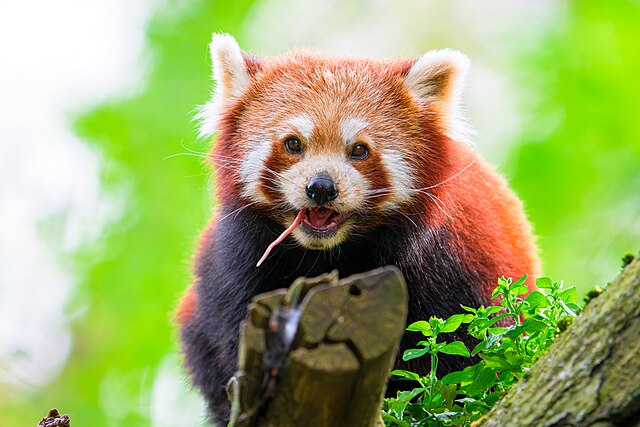
Deep within the fog shrouded bamboo forests of the Himalayas lives a mysterious creature that recently caused a stir in the scientific community. At the end of 2025, the rare Red Panda, also known as the Firefox, was spotted again in the Dhaulagiri region of western Nepal. This sighting reaffirmed the critical importance of vast forest corridors for these animals. However, the most shocking revelation lay hidden in their DNA. Historical scientific research has now proven that the Himalayan Red Panda found in India and Nepal is not a common variety but a genetically distinct species from the one found in China. No wall separates these two species; instead, the massive Brahmaputra River has kept them apart for millions of years. This scientific discovery highlights that the Red Panda of India and Nepal is a unique part of evolutionary history, making its protection a top priority for both nations.
What unique features help the Red Panda hide and eat bamboo?
The Red Panda is a biological marvel. One of its most fascinating traits is a pseudo thumb, which is actually an extension of the wrist bone that allows it to grip bamboo stalks firmly. Its primary diet consists of tender bamboo leaves and shoots, which it chews using powerful jaws. Since bamboo is low in nutrients, the Red Panda spends most of its day eating to maintain energy. Its thick, reddish brown fur provides perfect camouflage among the red and brown mossy trees of the Himalayas, keeping it safe from predators. The long, bushy tail helps maintain balance while moving through trees and also acts as a warm blanket, covering its face during freezing temperatures.

By what names is this creature known in the cultures of India and Nepal?
In the Himalayan regions, this animal is more than just wildlife; it is a sacred part of local culture and faith. In the forests and villages of Nepal, it is known as Habre. In India, it is locally called Ponya. Experts believe the world famous word Panda actually originated from this Indian term Ponya, which means a bamboo eating creature. Folk tales from mountain communities in India and Nepal depict the Red Panda as a symbol of good luck and a positive omen. Local people believe that any forest inhabited by this creature is balanced and healthy. Today, community based tourism is being encouraged around this animal in Nepal, where locals act as guardians of these rare beings and educate visitors about their significance.
How is the threat of extinction currently affecting the Red Panda?
The greatest threat facing the Red Panda today is not predators but inbreeding. In Indian states like Sikkim and Arunachal Pradesh, deforestation and road construction have fragmented their habitats into small patches. When Red Panda families are confined to tiny forest pockets, they cannot meet other groups. Repeated breeding within the same family weakens their genetic strength and reduces their ability to fight diseases. Scientists call this silent extinction. It is a slow poison that hollows out the species without making any noise. If the forest corridors connecting these patches are destroyed, these shy creatures will soon be lost to history.
How does the Kanchenjunga landscape serve as a vital genetic bridge?
To save these animals from silent extinction, the Kanchenjunga landscape along the borders of India and Nepal plays a crucial role. This area acts as a genetic bridge connecting the Singalila National Park in India to the forests of the Ilam district in Nepal. Recent research indicates that the unrestricted movement of Red Pandas between these two countries is essential for maintaining a healthy gene flow. If the forests between Singalila and Ilam are cleared, this genetic bridge will break. Researchers have been monitoring the population and genetic flow in this border region. This study emphasizes that the future of the Himalayan Red Panda does not rest with a single nation but depends on how both countries work together to protect these forest corridors.
How is science helping to save this living fossil in Darjeeling?
As natural habitats face constant threats, science has found a futuristic way to protect these creatures. At the Padmaja Naidu Himalayan Zoological Park in Darjeeling, India, an advanced conservation breeding program is underway. Scientists here are doing more than just caring for the animals; they are utilizing a modern technique called biobanking. This involves freezing the DNA and genetic material of Red Pandas at extremely low temperatures to keep them safe. The DNA of pandas living in the zoo is carefully analyzed to ensure that any offspring born are genetically robust. This unique blend of science and conservation ensures that this living fossil of evolution does not vanish from the Earth forever.
Sources:
https://tinyurl.com/22vehyrn
https://tinyurl.com/2f2769xb
https://tinyurl.com/27ujyhub
https://tinyurl.com/24rw6u2e
https://tinyurl.com/24fedhc8
https://tinyurl.com/27goqjwn
https://tinyurl.com/2atl5ll8