


Timelines 10
Man and his Senses 10
Man and his Inventions 10
Geography 10
Fauna 10
Timelines 10
Man and his Senses 10
Man and his Inventions 10
Geography 10
Fauna 10
Can you imagine a predator powerful enough to drag prey twice its own weight, yet now forced to change its sleep patterns out of fear of humans? Roaming the golden grasslands of the Terai and the dense forests of India and Nepal, the Bengal Tiger is not just an animal but the uncrowned emperor of this ecosystem. However, this emperor is now in crisis. While the roar of tigers still echoes across the Terai Arc Landscape, shrinking corridors and a growing human population have forced them to alter their lifestyle. Recently, the success of secure livestock enclosures near the borders of Valmiki Tiger Reserve and Nepal has raised hope that science and better understanding can reduce the long-standing conflict between humans and tigers. This is not just a story of a predator, but of nature's unbreakable spirit finding a way despite all obstacles.
What is the secret behind the physical structure and strength of the Bengal Tiger?
The Bengal Tiger is one of the most iconic cat species in the world. Its most recognizable feature is the black stripes on its orange coat, which are as unique to each tiger as human fingerprints. An adult male tiger can weigh between 200 and 260 kilograms, while females are slightly smaller. Their legs are incredibly powerful, and the fleshy pads under their paws help them walk silently even on dry leaves. Tigers are primarily solitary creatures that mark the boundaries of their vast territories using urine and claw marks. Their night vision is six times better than that of humans, making them the deadliest hunters in the dark. This tiger is not only an expert swimmer but also possesses the ability to catch its prey underwater.
How do the blind tiger cubs spend their early life?
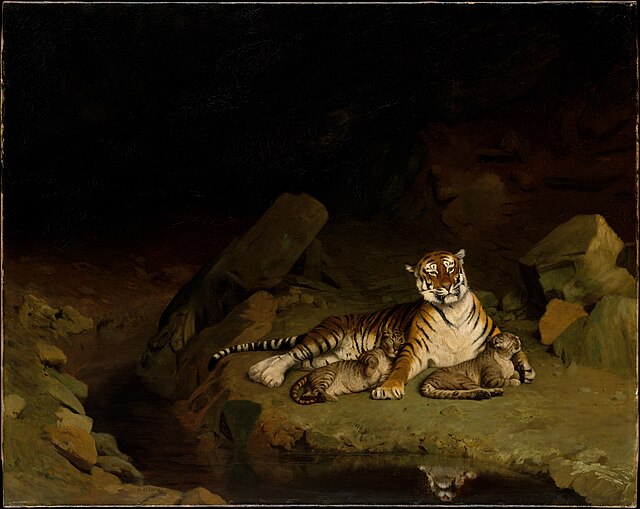
The social structure and breeding cycle of tigers are highly complex and full of emotion. A tigress gives birth to an average of two to four cubs, who are completely blind and helpless at birth. For the first few weeks, they rely entirely on their mother's milk. This is the most challenging time for the tigress, as she must hunt for her babies while also protecting them from rival male tigers. Male tigers often kill another's cubs so the tigress becomes ready to mate again. As these cubs grow, their mother teaches them the art of the ambush. By the time they reach two to three years of age, the cubs separate from their mother to find their own territories. The Terai region serves as a massive school for these cubs, where they learn the harsh lessons of life.

Are tigers becoming nocturnal due to the fear of humans?
Research conducted in the border areas of Nepal and India reveals a shocking truth. As human movement and road networks have expanded through the forests, tigers have made a revolutionary change in their behavior. They now prefer to come out during times when human activity is at its lowest. Scientific studies show that tigers in the Terai regions of Nepal have become much more nocturnal than before. They stay hidden in dense forests during the day and step out to hunt and patrol in the dead of night. This is known as a landscape of fear. This behavior demonstrates that tigers want to avoid direct confrontation with humans and are trying to share the same space at different times.
What does rest-to-roam behavior mean, and why is it important for animals?
When tigers leave their forests and enter areas with human settlements, farms, or roads, they change their pace. Scientists have named this behavior rest to roam. Research shows that instead of stopping or resting in human dominated areas, tigers increase their speed. They try to cross these zones as quickly as possible to avoid being seen. This behavior is crucial for their safety because any encounter with humans often proves fatal for the tiger. Data from camera traps reveals that tigers conserve their energy while crossing these corridors and only rest in safe hideouts. This adaptability is exactly what keeps them alive in today's changing world.
What is the place of the tiger in our folk culture and faith?
In the centuries old folklore and religious beliefs of India and Nepal, the tiger holds a highly revered position. It is not merely an animal but a symbol of power and protection. In Hinduism, the tiger is worshipped as the vehicle of Goddess Durga, representing the victory of good over evil. Meanwhile, in the tribal areas of Maharashtra and central India, a deity named Waghoba is worshipped as the protector of tigers. According to local folklore, if villagers worship Waghoba and respect the rules of the forest, the tiger protects them and their cattle. This reverence fosters tolerance towards tigers, which forms the strongest foundation for conservation. For tribal communities, the tiger is the soul of the forest, and its presence is proof that the forest is alive.
How are modern solutions like predator proof pens succeeding?
To reduce human tiger conflict, laws alone are not enough; grassroots innovation is required. In places like Valmiki Tiger Reserve and Chitwan National Park, protected livestock shelters have made a big difference. These are sturdy enclosures where farmers keep their livestock at night so that tigers or leopards cannot attack them. Recent reports from February 2026 show that these enclosures have led to a significant decrease in livestock attacks. When the economic loss for villagers decreases, their anger and desire for revenge against tigers also fade. This technology demonstrates how small changes can be incredibly helpful in achieving major conservation goals.
Will science and technology secure the future of tigers?
Today, tiger conservation relies on more than just guards and sticks; it heavily involves genetic studies and high tech camera traps. Scientists in India and Nepal analyze DNA from tiger fecal samples and hair to study their lineage and health. Sharing information between both countries has become mandatory for conservation in the Terai Arc Landscape. Camera traps help identify tiger movement corridors so that development work can be limited in those areas. The National Trust for Nature Conservation in Nepal and the Indian Forest Department are working together to restore these corridors. The goal is clear: to create a safe passage for tigers where they can roam without any human threat.
The survival of the tiger is not just about the beauty of the forest; it is the linchpin of our ecological balance. If this apex predator is safe, it means our forests, our rivers, and our environment are also secure. These striped ghosts of the Terai remind us that the balance between development and nature is the only key to the future. Growing scientific cooperation between India and Nepal, along with the changing mindset of communities, provides assurance that the roar of this jungle emperor will never fall silent. Can we return the ancient forests to the tigers? That is the question before us today.
Sources
https://tinyurl.com/2ycv8khq
https://tinyurl.com/24mlsyv8
https://tinyurl.com/26786erf
https://tinyurl.com/24genns7
https://tinyurl.com/2azlcyxl
https://tinyurl.com/838fx2k
https://tinyurl.com/238xp8rc